



Five manipulative tactics keep showing up on websites: fake timers, fake scarcity, fake testimonials, fake claims and fake images. Timers and scarcity are fine when there’s a real reason behind them. Everything else always hurts your business in the long run. Good marketing is built on truth.
Everything is fighting for your attention.
Wherever you look: sensational headlines. In the news, on LinkedIn, on YouTube, on Instagram. I’m fighting for your attention too. That’s no secret. Attention is the currency of the 21st century.
The question I always ask myself: What’s the intention behind it? Does only the person getting the attention benefit? Or the person giving it as well? In my view, that’s the difference.
A headline scares you. You read the article and in the end nothing has happened. First you’re frightened, then there’s nothing left.
A headline is sensational, but you get real value in exchange. Your attention is rewarded with something. Then it isn’t a let-down.
Here are five psychological manipulation tricks that I sadly see on websites all the time.
01 / Fake timers
Timers that never run out.
Picture this: it’s the evening, your date is about to start, and it hits you: “We still need popcorn!” It’s 9:45 pm. You know perfectly well that the supermarket closes at 10 pm. You throw on your clothes and head out. At 9:57 pm you’re standing happily at the till.
When people really want something and time is short, they act straight away. You know this from school too: two weeks to write an essay, and the night before the deadline you work right through until morning.
Scarcity of time gets people to act. What I sadly keep seeing on websites: fake timers. These are timers that never run out. They just start again from the top, over and over. That’s how you’re put under artificial pressure to buy.
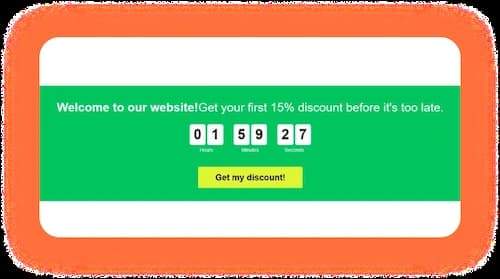
There’s nothing wrong with timers as such. If it’s Black Friday and you only have a certain window to buy something, I think that’s cool. But if the timer has no real purpose and is only there to pile on pressure, that’s not cool at all.
A limited offer is powerful. If you have a deadline that makes sense, use it. If you don’t, leave it out.
02 / Fake scarcity
“Hurry! Almost sold out!” In ten years’ time too.
The same thing that happens with timers happens with scarcity. You land on a website and you’re told: “Hurry! Almost sold out!” And then it’s almost sold out every single day.
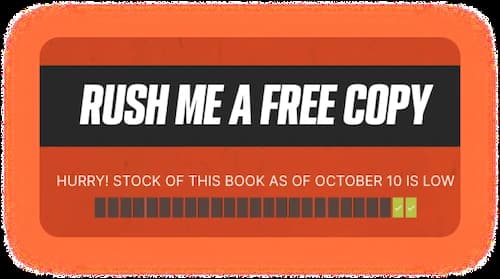
If you have a way of creating scarcity that makes sense, use it. For example:
- You want to keep the quality of a group high, so you only take on a handful of clients.
- You can only accept a certain number of projects a month so that you can still look after everyone properly.
- You’re giving something away, but you can only put so much time or so many resources into it before it gets too much.
If your fake scarcity gets found out, you lose a huge amount of reputation. And in online business especially, reputation matters a lot.
03 / Fake testimonials
Client testimonials nobody wrote.
A little story on that. Many years ago I was still working at an agency, mostly building websites. One client asked us to write a few fake testimonials for them. I thought it was dreadful even back then. Luckily I didn’t have to write them myself.
Do you know what was done to make them look “more authentic”? A few spelling mistakes were added on purpose. When I think back to it, I just find it unbelievably embarrassing.
Sadly, I see this kind of thing again and again: abbreviated names, no photos, three sentences passed off as a testimonial. That’s weak. What people really want to see:
- Real people
- Real experiences
- Real words
- Real results
As a matter of principle, your testimonials should have a full name, the company, a photo and a long text. If you don’t have genuinely good reviews, you’ll lose. How to get real client testimonials is covered in my guide to testimonials.
04 / Fake claims
“Become a billionaire in umpteen days, guaranteed.”
You’ve definitely seen this one: business gurus promising that you’ll hit a certain result in three months.
I’ve been through quite a few coaching programmes myself and invested around €60,000 in them over four years. I was lucky that pretty much every one of them paid off massively for me. But in every single programme there were people who didn’t make it. That’s not always down to the coach. Sometimes it’s down to the coachee. There is no guarantee.
Don’t guarantee anything you can’t deliver.
“You’ll get a certain number of calls per week.” I can’t guarantee the output. That always depends on your marketing as well.
If a mistake on my part turns up after launch, it gets fixed free of charge. I keep producing drafts until we’ve found the right one. Your website is built to be sales-optimised and designed individually for you.
I can only guarantee the input. And that you’ll get a website.
05 / Fake images
The house for a million euros.
My mum once told me a funny story from the days when eBay was still hugely popular. A man sees a picture of a house on there. The opening bid is €1,000,000. He thinks: “What a bargain!” He bids €1,000,001 and wins the auction.
The man is over the moon. He rings his landlord straight away, gives notice on his flat and starts packing his things. About five days later his doorbell rings. He’s handed a tiny parcel. He opens it and feels something hard and angular.
It was the house from eBay. A miniature house. For a million euros.
What’s the lesson? Be careful with what you see on the internet. Not everything is what it seems. Sadly, plenty of sellers use fake images of their products. If you notice something like that, warn other people. Especially if you’ve already bought the product. Leave a review.
Good marketing is built on truth.
Whatever you do, never use:
- 01Fake timers
- 02Fake scarcity
- 03Fake testimonials
- 04Fake claims
- 05Fake images
It always hurts your business in the long run. Short-term tricks only make you happy for a brief moment.
Deliver brilliant results, then show them to people. What that looks like on a website is covered in the article Building trust on your website. And if you want your website to sell honestly: Book a call with Kris.
Frequently asked questions about manipulative tactics
What is a fake timer?
A countdown on a website that never really runs out and just keeps starting again. Its job is to create artificial pressure.
Are timers on websites bad in general?
No. If there’s a real deadline, on Black Friday for example, a timer is fine and it works. Without a real reason, leave it out.
How do I spot fake testimonials?
By abbreviated names, missing photos and very short texts. Real testimonials have a full name, the company, a photo and a long text.
Can I use scarcity honestly?
Yes, if there’s a real reason for it: limited places to keep the quality up, or a limited number of projects so that you can look after everyone properly.
What can I guarantee my clients?
Only what’s in your own hands, in other words your input. Results such as a certain number of calls depend on other factors and can’t be guaranteed.
Collecting testimonials that sell →Building a sales-optimised website: 8 key sections →The thank-you page after a booking: building trust before the intro call →How to create a sales page: bring in more revenue with your sales page →What does a professional website cost? My prices laid bare →60 website mistakes that cost you enquiries →Getting a website built: the process in 7 phases →Website check: the two-tab test in 10 minutes →Landing page structure: the LEAD-FIND formula in 8 sections →Creating a lead magnet: a freebie people actually want →Measuring website success: the numbers you need to know →Your website as a sales rep: 8 jobs it does for you →Building trust on your website: show, don’t tell →Positioning for service providers: stop being comparable →Irresistible offer: 5 steps to make it sell →Becoming a premium service provider: be premium, don’t just charge premium prices →
